Energy Challenges of Taiwan and Asia’s AI ambitions
As artificial intelligence (AI) usage accelerates, its energy demands are reshaping global markets and regional strategies. Taiwan seeks to position itself as a leading AI hub but faces mounting challenges to support AI’s high energy consumption amid energy security concerns. Heavily reliant on imported fossil fuels for power generation, Taiwan is contending with challenges of energy security, reliability, and sustainability to achieve its technological ambitions. Other Asia-Pacific countries are pursuing similar technology and sustainability goals during this time of vulnerable supply chains, intensifying geopolitical disruption, and US–China strategic competition.
On December 12, CAPRI, CAPRI USA, and the Center for Asia Policy Studies at the Brookings Institution hosted a panel of experts for a discussion on the energy implications of the AI boom for Taiwan and the Asia-Pacific region. They examined how Taiwan and others in the region are handling their respective energy challenges in relation to their technological ambitions, what Taiwan can learn from its neighbors, and how the US approach to energy and AI policy is impacting the Asia-Pacific region.
These themes form part of CAPRI’s recently launched initiative “Navigating the Green Transition: Economic Growth and Energy Security in the Asia Pacific.” This multi-year project will bring together research and engagement across ten Asia-Pacific countries to explore how they can manage rising energy demands while advancing sustainability and balancing growth and security.
Agenda
Introduction
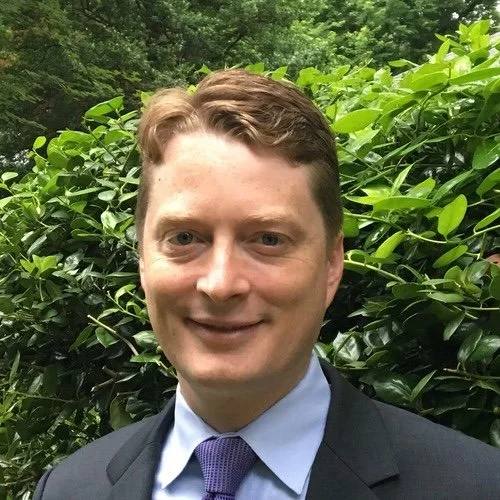
Ryan Hass
Chen-Fu and Cecilia Yen Koo Chair in Taiwan Studies; Director, John L. Thornton China Center, Foreign Policy, The Brookings Institution
-
Michael M. Crow is an educator, knowledge enterprise architect, science and technology policy scholar and higher education leader. He became the sixteenth president of Arizona State University in 2002 and has led ASU’s rapid and groundbreaking transformation into one of the world’s best public metropolitan research universities. As a model “New American University,” ASU simultaneously demonstrates comprehensive excellence, inclusivity representative of the ethnic and socioeconomic spectrum of the US, and consequential societal impact.
Lauded as the “No. 1 most innovative school” in the nation by U.S. News & World Report for 10 straight years, and garnering top accolades for its global impact and student employability, ASU is a student-centric, technology-enabled public enterprise focused on global challenges that grew its research expenditures more than eight-fold since 2003 and earned AAU membership in 2023. Under Dr. Crow’s leadership, it has established more than thirty new transdisciplinary schools, including the School of Earth and Space Exploration, the School for the Future of Innovation in Society and the School of Human Evolution and Social Change, and launched pioneering multidisciplinary initiatives including the Biodesign Institute, Julie Ann Wrigley Global Futures Laboratory, the nation’s first School of Sustainability, and significant initiatives in the humanities and social sciences.

Syaru Shirley Lin
Founder and Chair, Center for Asia-Pacific Resilience and Innovation
-
Syaru Shirley Lin is the founder and chair of CAPRI, a nongovernmental, nonpartisan international think tank advancing global resilience and innovative policy through comparative research in the Asia Pacific. Prof. Lin is also the president of CAPRI USA, an independent international organization and CAPRI’s US affiliate. A nonresident senior fellow at the Miller Center of Public Affairs at the University of Virginia and adjunct professor at the Chinese University of Hong Kong, she teaches in Taipei, Hong Kong, Beijing, and Virginia. She serves on the steering committee of the World Economic Forum’s Partnership for Health System Sustainability and Resilience, and she was a senior advisor to Taiwan’s Talent Circulation Alliance, an initiative promoting Taiwan as a regional and global hub for talent.
Her book, Taiwan’s China Dilemma, analyzes cross-Strait economic policy, with a focus on the semiconductor and petrochemical industries, and her commentaries appear frequently in both English and Chinese media. She sits on the boards of MediaTek, TE Connectivity, Goldman Sachs Asia Bank, Langham Hospitality Investments, and the Focused Ultrasound Foundation.
Earlier in her career, Prof. Lin was the youngest woman and one of the first Asian partners at Goldman Sachs, where she spearheaded investments in Asian technology start-ups. She led the firm’s highly successful investments in China, including the first institutional rounds in Alibaba and SMIC. She holds a PhD and master’s degree from the University of Hong Kong and a bachelor’s degree from Harvard College.
Panelists
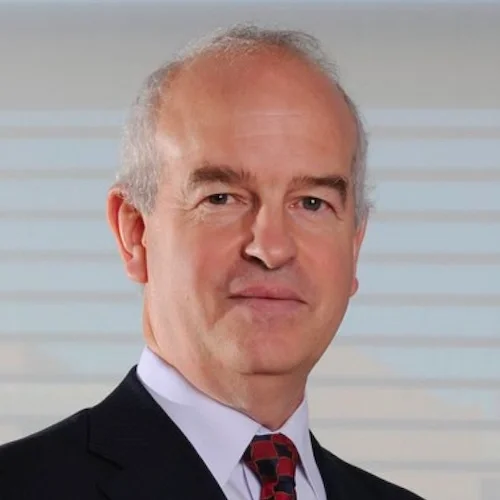
Gary Dirks
Senior Director and Professor of Practice, LightWorks, Arizona State University
-
Gary Dirks is senior director, Global Futures Laboratory, and director of LightWorks®, an Arizona State University initiative that capitalizes on ASU’s strengths in solar energy and other light-inspired research. From 2013-2019, he was the director of ASU’s Wrigley Institute. He is also the Julie Wrigley Chair of Sustainable Practices, professor of practice in the School of Sustainability, and distinguished sustainability scientist.
Before joining ASU, Professor Dirks was the president of BP Asia-Pacific and the president of BP China. During his presidency, BP China grew from an operation with fewer than 30 employees and no revenue to more than 1,300 employees and revenues of about $4 billion in 2008.
He received China’s “Friendship Award” in 2003 and received an honorary Companion of the Order of St. Michael and St. George from the United Kingdom in 2005. In December 2008 he was recognized by the People’s Daily as one of the 10 most influential multinational company leaders of the last 30 years of China’s economic development. In 1999 he received the CLAS Leaders Award for his extraordinary leadership skills while driving positive change locally and internationally by the College of Liberal Arts and Sciences at Arizona State University.
Professor Dirks received a Ph.D. in chemistry from ASU in 1980. He was the first doctoral student to work in the Center for the Study of Early Events in Photosynthesis (now the Center for Bioenergy and Photosynthesis).

R. David Edelman
Nonresident Senior Fellow, John L. Thornton China Center, The Brookings Institution; IPRI Distinguished Fellow, Massachusetts Institute of Technology
-
R. David Edelman is the IPRI Distinguished Fellow at Massachusetts Institute of Technology, holding appointments in the Computer Science & Artificial Intelligence Lab and Center for International Studies and leading research on the governance of artificial intelligence, the geopolitics of technology and telecommunications, and the national security dimensions of computing at the Internet Policy Research Initiative.
His book, “Rethinking Cyber Warfare: The International Relations of Digital Disruption,” will be released by Oxford University Press on May 7, 2024. He is currently writing and engaging on several projects at the intersection of technology, national security, and international economics including the role of AI and digital supply chains in the U.S.-China relationship; escalation and possibilities for restraint of cyber-enabled conflict; the future of trade and global data flows; and the domestic and international governance of AI systems.
For over a decade in government, Edelman advanced many of the U.S. government’s foundational technology policies spanning international cyber policy, internet governance, digital trade, AI, and emerging technologies. He served for six years in the Obama White House, including as special assistant to the president for economic & technology policy on the National Economic Council, director for cybersecurity on the National Security Council, and senior advisor in the Office of Science & Technology Policy. When appointed in 2010, he was the youngest-ever director in the NSC’s 60-year history. Prior to the White House, he began his career as a civil servant at the State Department and helped found the Department’s Office of Cyber Affairs, ultimately serving as lead U.S. negotiator on cybersecurity and digital economy matters at the United Nations and later, the G-20. He was the recipient of multiple superior and meritorious honor awards during his tenure.
In the private sector, he has built public-sector and global strategy teams at leading companies in the AI, robotics, and clean energy sectors; founded an advisory firm helping emerging technology companies and executives navigate geopolitics and cybersecurity risks; invested in a range of venture-backed startups; and appeared as a frequent keynote speaker.
His insights and analysis have appeared in print in the New York Times, Wall Street Journal, Washington Post, Der Spiegel, Financial Times, The Economist, WIRED, Fast Company, Forbes, and Fortune, and in broadcast on NPR, CNN, Bloomberg, CNBC, and MSNBC. He is a life member of the Council on Foreign Relations.
Edelman holds a bachelor’s from Yale, and a master’s and doctorate from Oxford University, where he was a Clarendon Scholar.

Tarcy Sih-Ting Jhou
Senior Researcher, Asia Pacific Energy Research Centre
-
Tarcy Sih-Ting Jhou is a senior researcher at the Asia Pacific Energy Research Centre (APERC), Tokyo. Her work focuses on regional energy analysis in the Asia Pacific and contributes to the centre’s studies on the long-term energy outlook for the APEC region. Tarcy also focuses on hydrogen analysis and examines emerging developments in Taiwan.
Prior to joining APERC, Tarcy served as a project director at the Industrial Technology Research Institute in Taiwan and previously managed the Renewable Energy Project Office. Her experience spans clean energy development, international cooperation, and hydrogen deployment research.
Moderator

Samantha Gross
Director, Energy Security and Climate Initiative; Fellow, Foreign Policy, The Brookings Institution
-
Samantha Gross is the director of the Energy Security and Climate Initiative and a fellow in Foreign Policy. Her work is focused on the intersection of energy, environment, and policy, including climate policy and international cooperation, the transition to net-zero emissions energy system, energy geopolitics, and global energy markets.
Gross has more than 25 years of experience in energy and environmental affairs. In 2021, she was a Brookings Robert Bosch Foundation Transatlantic Fellow in Berlin. She has been a visiting fellow at the King Abdullah Petroleum Studies and Research Center, where she authored work on clean energy cooperation and on post-Paris climate policy. She was director of the Office of International Climate and Clean Energy at the U.S. Department of Energy. In that role she directed U.S. activities under the Clean Energy Ministerial, including the secretariat and initiatives focusing on clean energy implementation and access and energy efficiency. Prior to her time at the Department of Energy, Gross was director of integrated research at IHS CERA. She managed the IHS CERA Climate Change and Clean Energy forum and the IHS relationship with the World Economic Forum. She has also worked at the Government Accountability Office on the natural resources and environment team and as an engineer directing environmental assessment and remediation projects.
Gross appears frequently in the media in the United States and abroad on topics of energy markets, energy security, and the green energy transition.
Gross holds a Bachelor of Science in chemical engineering from the University of Illinois, a Master of Science in environmental engineering from Stanford, and a Master of Business Administration from the University of California at Berkeley.
Organized by


Date: Friday, December 12, 2025, 9:00–10:15 a.m. EST
Location: The Brookings Institution, Falk, 1775 Massachusetts Ave. NW, Washington, DC, 20036 and online