Global Innovation Reimagined Conference: AI Resilience
AI is enabling dramatic social and economic transformations globally. Asia, North America, and Europe are key stakeholders leading the world in this cutting-edge technology, yet each region has approached the promotion and regulation of AI in different ways. Policymakers across these three regions must balance harnessing the transformative potential of AI through its integration into diverse aspects of society with minimizing the risks of disruption.
In response to these demands, CAPRI, in partnership with CAPRI USA, the Rule of Law Programme Asia of Konrad Adenauer Stiftung (KAS), and the University of Virginia (UVA) Darden School of Business and Karsh Institute of Democracy, hosted the second annual Global Innovation Reimagined Conference on AI Resilience from June 17–19, 2026. Over 3 days, we gathered diverse stakeholders from the Asia Pacific, North America, and Europe to discuss not only how innovation drives AI development but also how innovative ideas are needed to ensure that AI contributes to resilient systems.
Date: June 17–19, 2026
Location: InterContinental Tokyo Bay, 1 Chome-16-2 Kaigan, Minato City, Tokyo
Welcome and Opening Remarks
Representatives from the three host organizations—including Syaru Shirley Lin, CAPRI founder and chair; Stefan Samse, director of the Rule of Law Programme Asia, KAS; and Scott C. Miller, assistant professor at UVA and senior fellow at the Miller Center of Public Affairs—welcomed participants and framed the upcoming multidisciplinary conversations on AI to follow.
Session 1: Utilizing Frontier Technologies for a Healthy Society
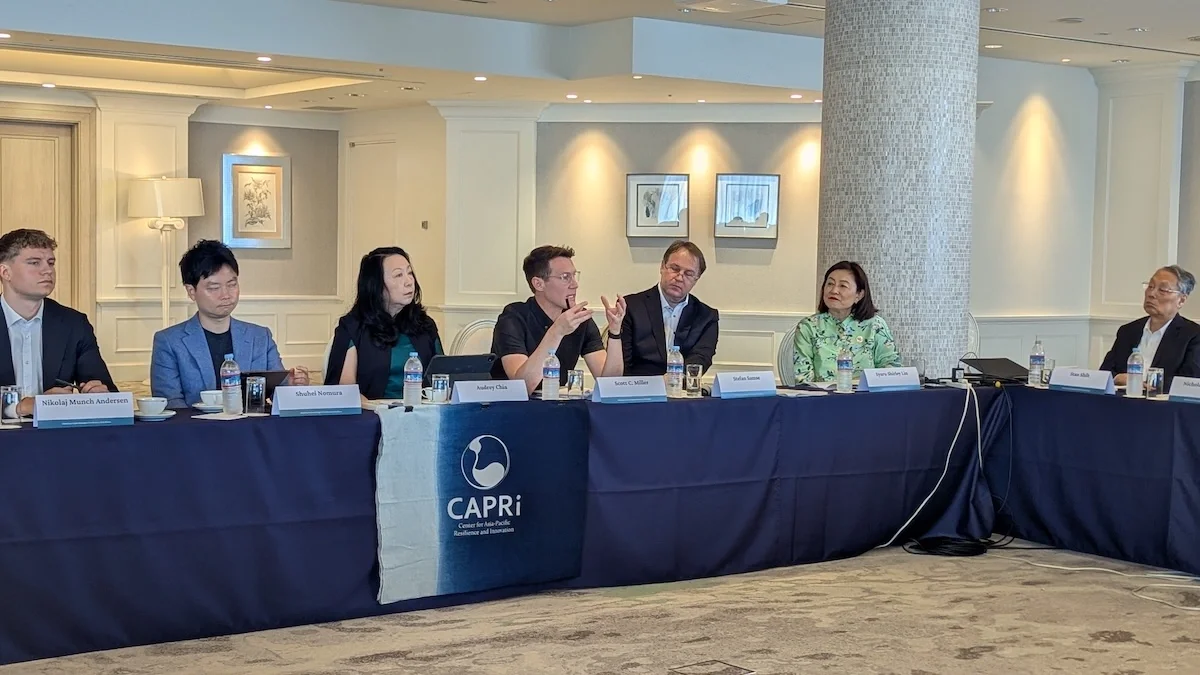
Audrey Chia, National University of Singapore Business School (session lead)
Margaret Foster Riley, University of Virginia and CAPRI USA Board Member
Nikolaj Munch Andersen, Denmark Ministry of Foreign Affairs
Shuhei Nomura, Tohoku University
How can emerging technologies, including AI and wearable devices, improve healthcare and public health decision-making while prioritizing transparency, accountability, and privacy? Addressing this question, the panelists discussed the need for effective governance frameworks that embed individual rights and attention to model bias. These frameworks could then guide AI-driven efforts to resolve systemic shortcomings in healthcare delivery and diagnostics, support evidence-based policymaking, and reduce global health inequalities. Alongside these challenges, AI offers several potential benefits, such as uncovering systematic errors in medical practice and healthcare systems.

Session 2: Energy Policies for Resilience, AI Innovation, and Social Rights
Introduction by Stan Shih, Acer Group and CAPRI Board Member
Siwei Huang, CAPRI (session lead)
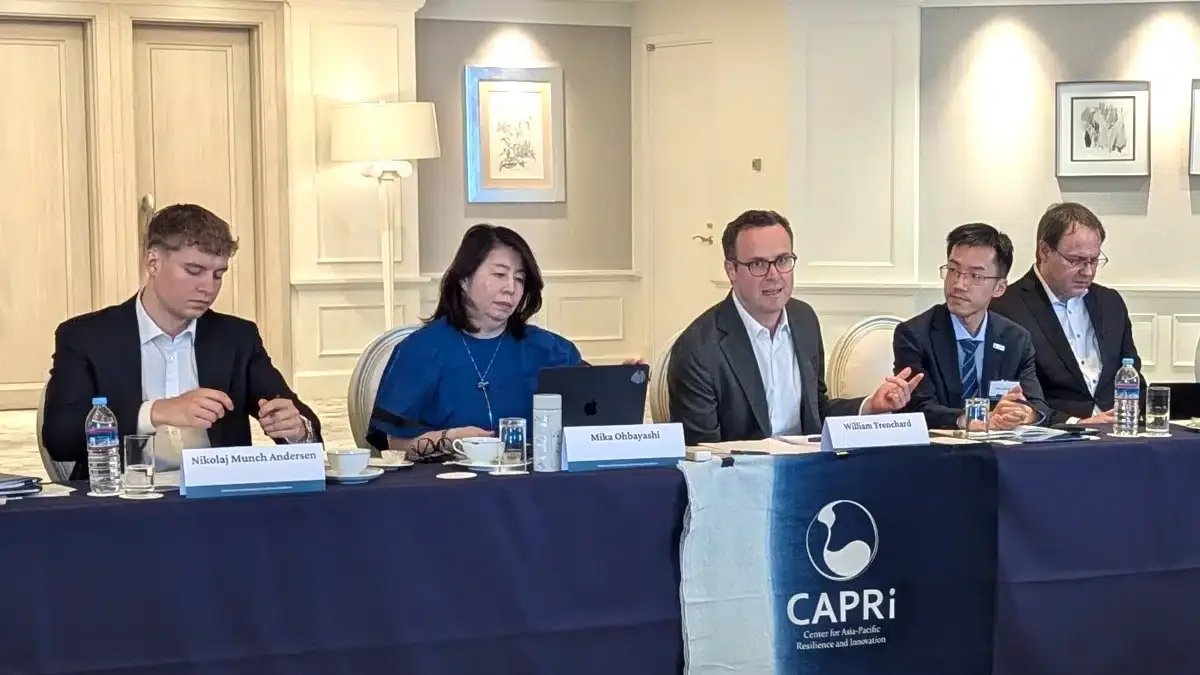
Mika Ohbayashi, Renewable Energy Institute
William Trenchard, Copenhagen Infrastructure Partners
AI has the potential to offer powerful solutions to improve energy efficiency and system performance, but these tools are themselves highly energy intensive. This session focused on how AI is intensifying trade-offs between competing energy policy objectives, with an introduction on how the “Wangdao” philosophy of management can drive innovation and sustainability in the AI era. The session also highlighted structural challenges that persist amid advancements in renewables, battery storage, and corporate power purchase agreements, including limited capital availability, constraints on the pace of new energy deployment, and geopolitical pressure on global supply chains.
Spotlight Remarks: Building an Ecosystem for Security, Resilience, and Innovation in the Age of AI
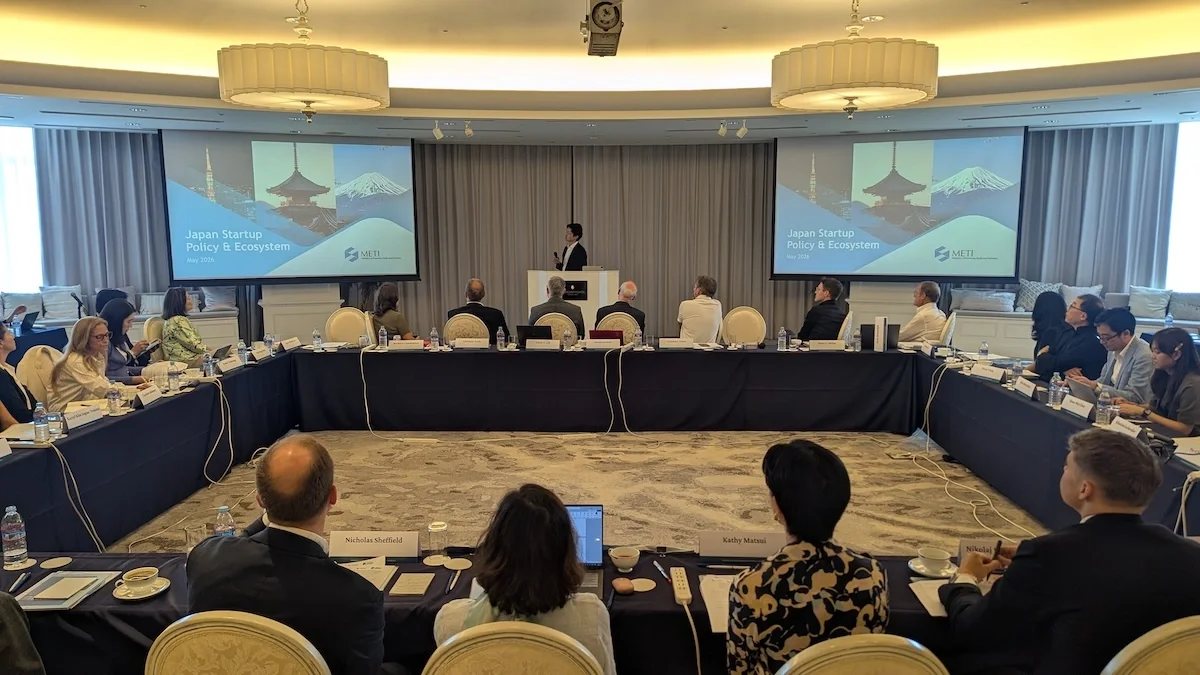
Hiroshi Ishikawa, Ministry of Economy, Trade, and Industry
This session outlined Japan’s linked efforts to promote technological sovereignty, industrial development, and national security by pairing strategic investment in semiconductors and AI with the establishment of more agile and flexible procurement mechanisms. Simultaneously, the Takaichi administration seeks to translate R&D into practical deployment, paying close attention to the social implementation of emerging technologies and fostering dual-use and defense startups.
Session 3: Crafting National AI Innovation Strategies
Kristy Hsu, Chung Huan Institution for Economic Research and CAPRI Senior Fellow
Kathy Matsui, MPower Partners
Nicholas Sheffield, Japan Activation Capital and Head of Japan Affairs at CAPRI (facilitator)
The panelists explored how Japan and Taiwan are developing new innovation strategies to simultaneously bolster both economic competitiveness and national defense capability. They pointed out differences in their national AI strategies. Taiwan has been prioritizing consolidating its semiconductor strengths, diversifying manufacturing, and moving supply chains out of China. Japan, on the other hand, has focused on deepening partnerships across Asia while maintaining a pragmatic approach to tech-sector engagement with China.

Session 4: AI and the Future of Space Governance
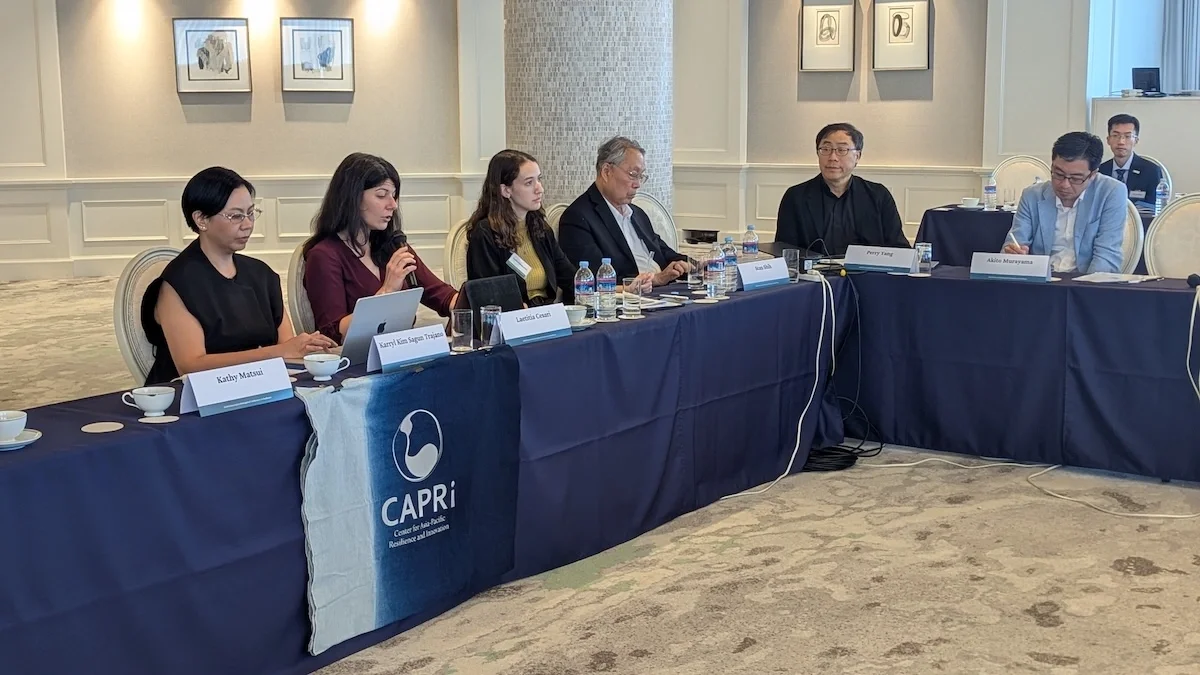
Laetitia Cesari, De Gaulle Fleurance
Karryl Kim Sagun Trajano, S. Rajaratnam School of International Studies, Nanyang Technological University
Rachel Bernstein, CAPRI (facilitator)
Like other AI applications, the integration of autonomous and semi-autonomous AI into satellite systems is accompanied by accountability challenges, along with unique testing limitations and collective consequences in the shared environment of space. Their conversation explored questions surrounding dual-use space technologies and the geostrategic considerations that countries face as they invest in advanced technologies while defending their national interests. Given slim margins for error, governance frameworks should include middle powers in Europe and Asia without satellite launch capabilities in identifying ways to ensure that humans remain accountable for critical decision-making.
Session 5: Securing a Sustainable Supply Chain for Frontier Technology
Syaru Shirley Lin, CAPRI (session lead)
Martin Schulz, Fujitsu
Bor Sung Liang, MediaTek
Jeremy Woo, D-Wave Quantum
As the Asia Pacific plays an increasingly central role in shaping how AI is designed and deployed, this session examined how AI hardware and new computing technologies are changing the game for international business and politics. They concluded that to survive in a divided global market, companies and governments should actively upgrade system engineering, maintain control over their own AI models, and leverage energy-efficient quantum computing to protect their independence while continuing to innovate.

Keynote Fireside Chat: Workforce Transformation Amid Technological Advancement
Ekkehard Ersnt, International Labor Organization
Scott C. Miller, University of Virginia (moderator)
The growing role of AI in society highlighted throughout the conference discussions may also foreshadow a paradigm shift for workforces worldwide, repositioning human contributions within the broader economy and employment landscape. Topics of focus moved beyond workplace AI exposure, encompassing the direct consequences of AI for productivity growth, inequality, and working conditions. The conversation highlighted the “AI trilemma” facing policymakers, comprising the need to balance accelerating productivity gains with maintaining social cohesion and equitable wealth distribution and managing AI’s escalating ecological footprint. Continuous “stress testing” of AI systems rather than sole reliance on ex-ante regulation can prompt a shift toward the use of AI to accelerate policy delivery itself.

Session 6: Examining AI Use in the Legal System
Barbara Cammarata, CAPRI USA Board Member
Kuan-Wei Chen, Kyoto University
Caroline Fried, CAPRI (facilitator)
The legal profession has quickly ramped up its use of AI, yet governance continues to lag behind. Although AI can streamline case management and document review, transcribe case notes, and support research and administration for legal systems worldwide, it poses fundamental challenges to privacy, transparency, data bias, and decision-making. The conversation addressed guardrails and training measures that can allow judges and legal practitioners to harness AI while preserving legal integrity and maintaining public trust. Public trust in judicial systems, once lost, is extraordinarily difficult to rebuild.

Session 7: Designing Sustainable Cities for Changing Terrain
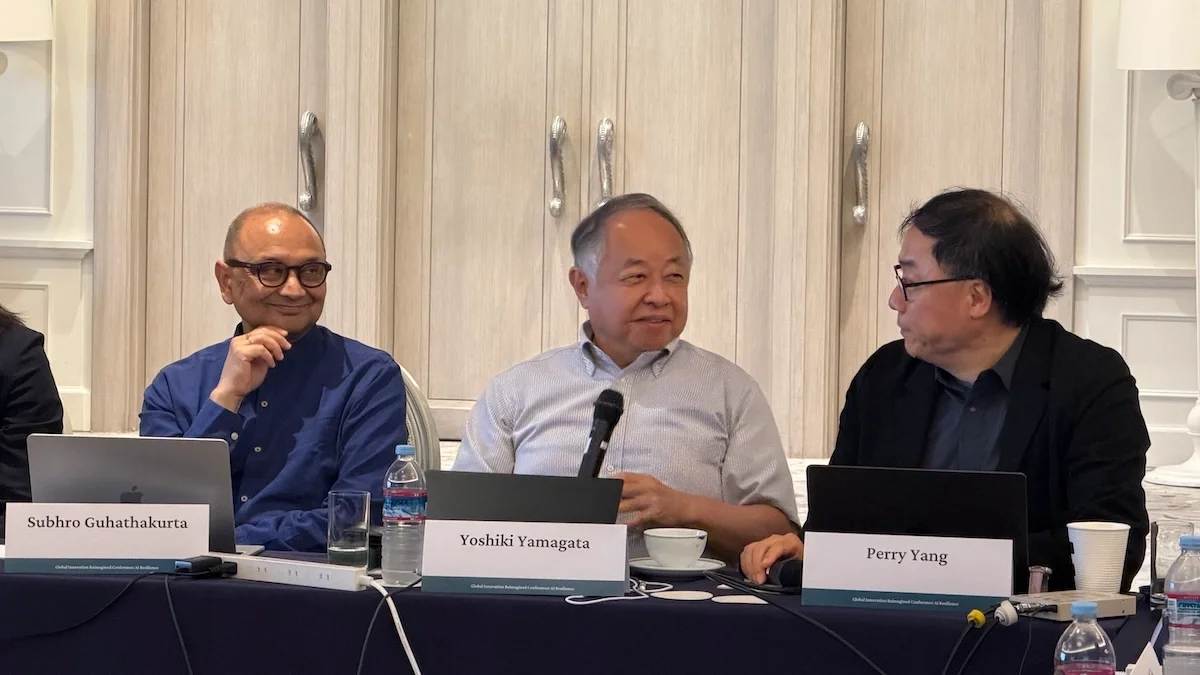
Perry Yang, Georgia Institute of Technology and CAPRI Senior Fellow (session lead)
Yoshiki Yamagata, Keio University
Subhro Guhathakurta, Georgia Institute of Technology
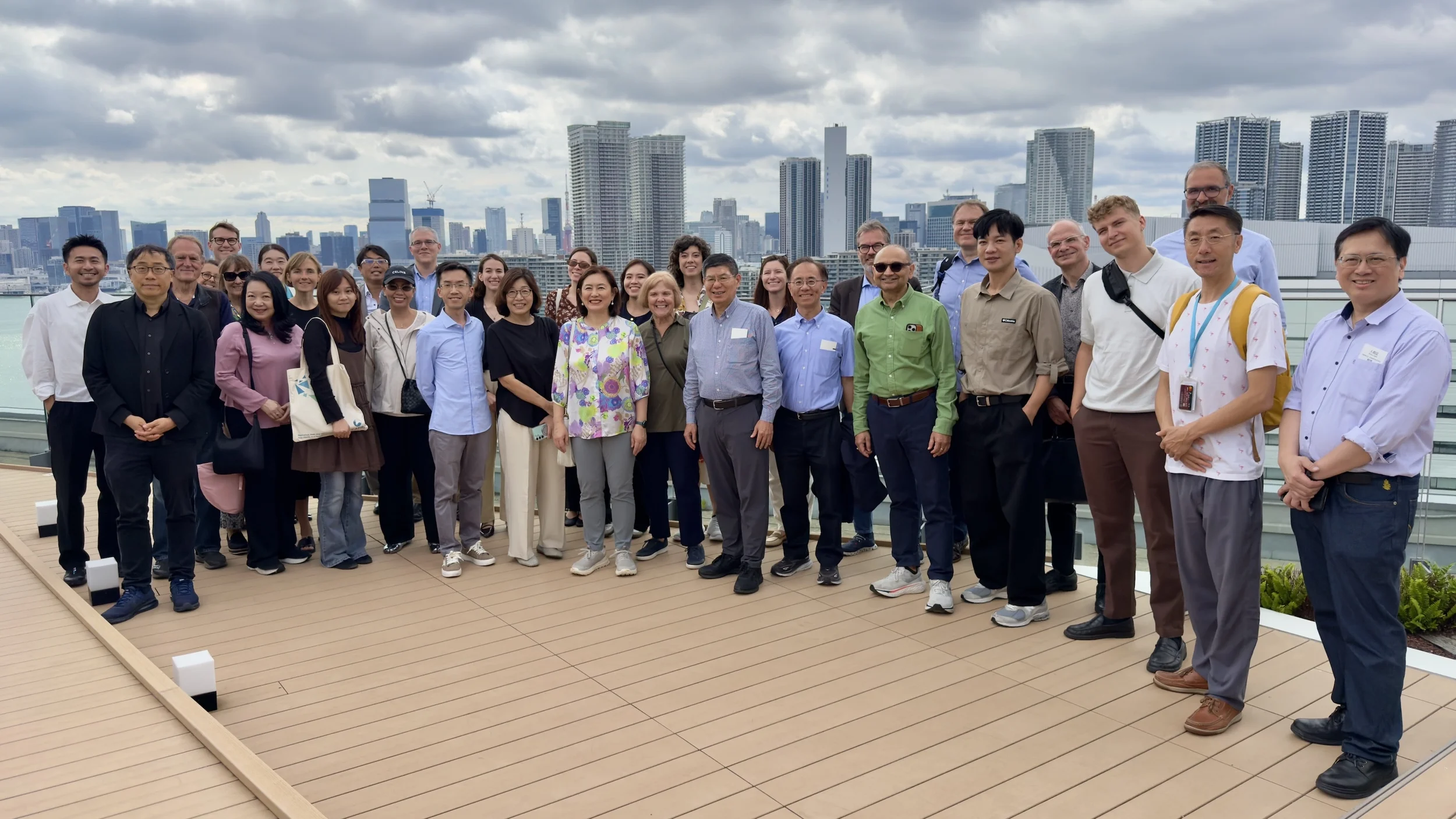
Cities worldwide must increasingly adapt to extreme weather patterns and rising sea levels, complicating effective and sustainable urban planning that benefits diverse populations. Building on the group’s conversations during an excursion to MiCHi Lab, this session explored how technological solutions intersect with innovative urban planning. discussed urban governance arrangements, transparency measures, and land-use laws. Panelists highlighted the advantages of AI in disaster planning, including near-real-time flood risk prediction at speeds existing models cannot match. Yet technology alone cannot resolve the human dimensions of urban life: the loneliness epidemic, particularly acute in Japan, represents a challenge that urban AI tools have yet to meaningfully address.
Session 8: Policy Innovations to Maintain Democratic Resilience
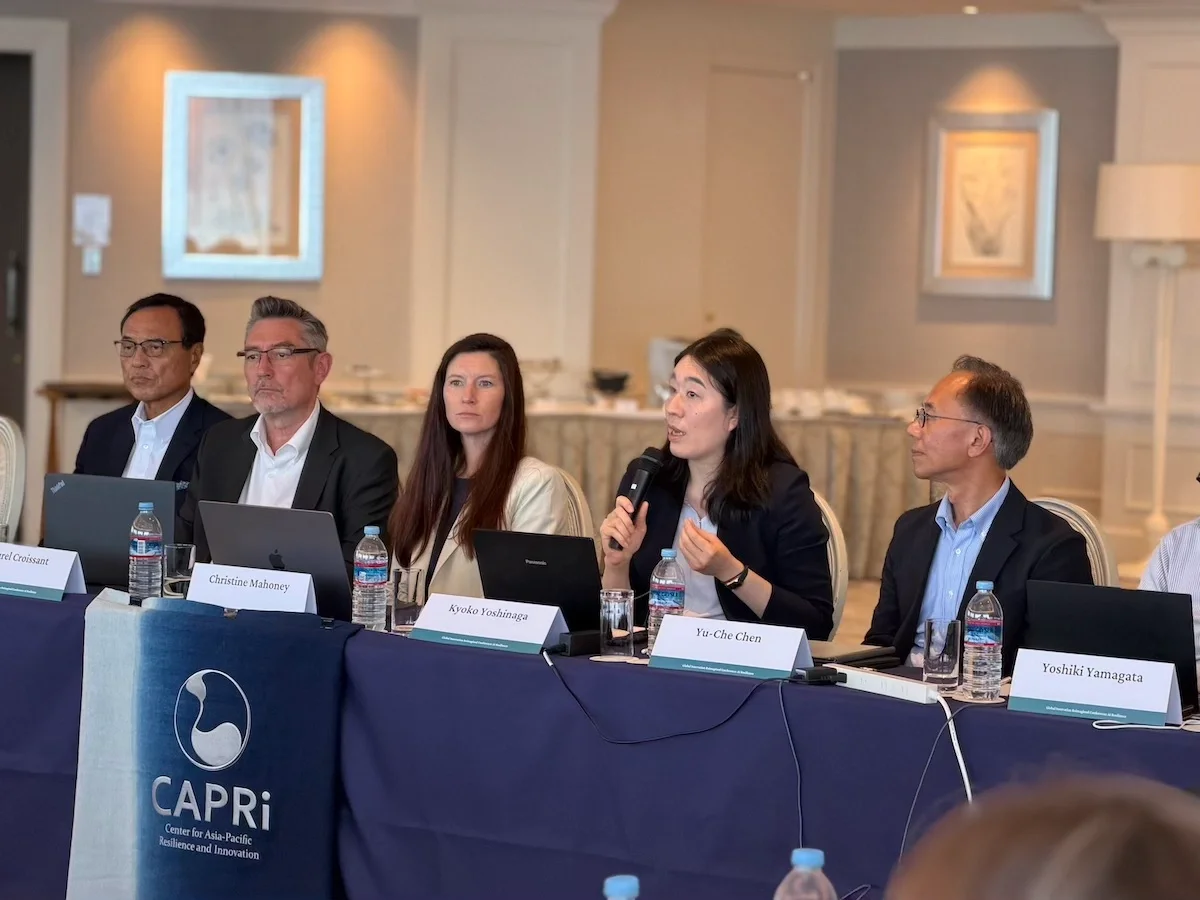
Yu-Che Chen, Digital Government Association and CAPRI Senior Fellow (session lead)
Kyoko Yoshinaga, Keio University
Christine Mahoney, University of Virginia
Aurel Croissant, Heidelberg University and CAPRI Senior Fellow
As AI permeates political and everyday life, challenging democracies worldwide, how can decision-makers across different governing systems promote the rule of law, protect fundamental rights, and continue to strengthen democratic institutions? The panelists examined how AI shapes civic engagement and democratic processes and discussed governance best practices to protect democratic institutions. Good AI governance necessitates cross-border collective action; however, with civil society varying dramatically in strength across regions, particularly between the US and Japan, and the rules-based international order fragmenting, it is difficult to develop a strong global governance model.
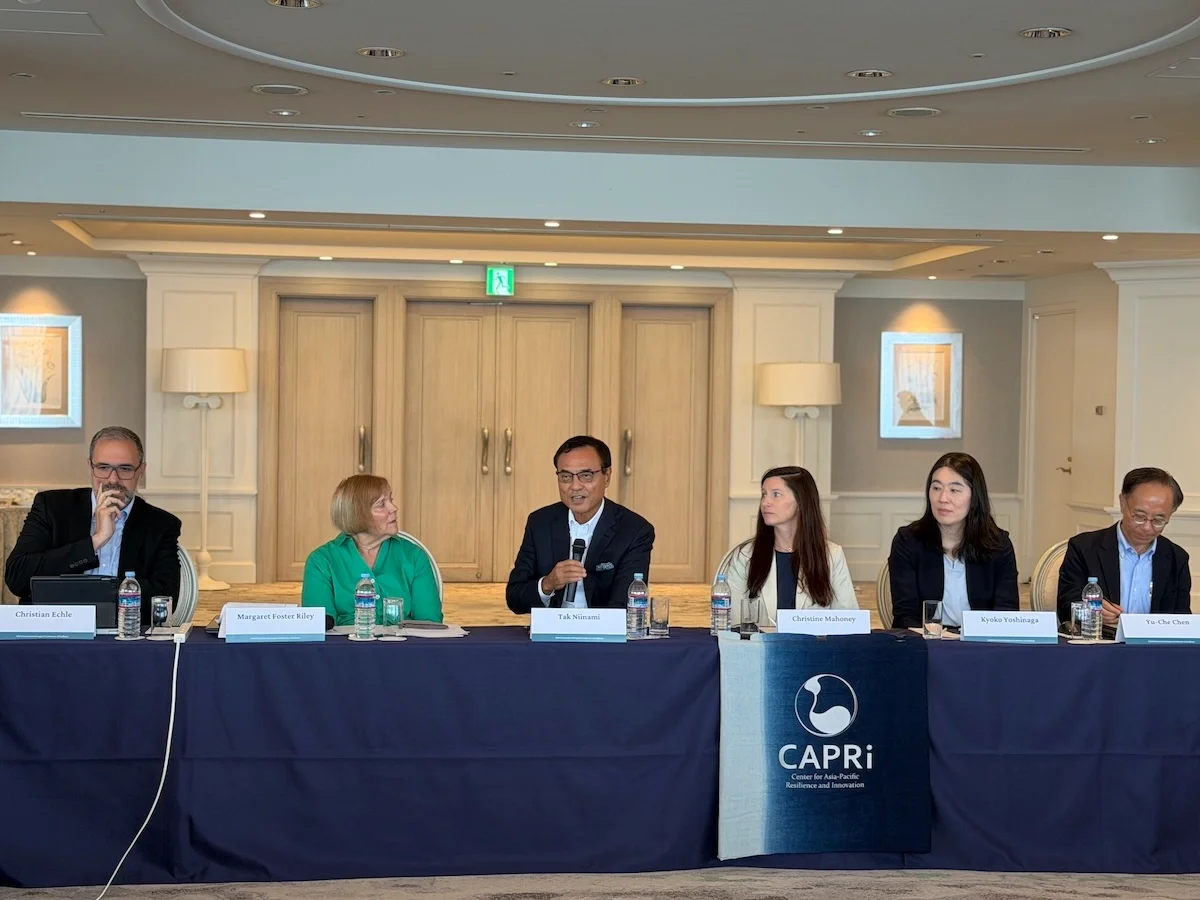
Closing Reflections
Margaret Foster Riley, University of Virginia and CAPRI USA Board Member
Tak Niinami, Trilateral Commission and CAPRI International Advisory Council Member
Christian Echle, Konrad Adenauer Stiftung
Drawing on what they learned from the 3 days of discussions on healthcare, energy, law, cities, and democracy, participants also called for governance frameworks that prioritize principles over prescriptive rules, address equity and transparency concerns, and treat individuals as active participants and not simply objects in democratic AI governance.
Co-hosts